
Photo by Name
This January was the first time I ever ran a pen dry writing.
A year ago, I took to scribbling down whatever interesting philosophical or story ideas came my way, in an effort to write more consistently and boost my creativity. As opposed to brainstorming in Google Docs or merely praying in my head, I have found a deeper satisfaction in writing down prayers and story notes with ink. Part of it is the challenge: writing takes more physical effort and thought than typing. “H” takes three strokes instead of a single tap, and autocorrect doesn’t exist, which means I actually have to think about the spelling of a word. In a world oversaturated with stupefying convenience, I’d rather bleed my pens dry rather than bleed my brain dry. It turns out the inconvenience of cognitive load is quite helpful in keeping your brain from dissolving like snow.
Running out of ink reminded me of drawing “Herose” (heroes) maps on blank sheets of paper in kindergarten with markers. They were treasure maps, except heroes used them to reach whatever goal they had in mind, much in the style of Dora the Explorer. I don’t recall much besides the colored fruits dotting stick plants on a sparse canvas. Of course, I don’t have much proof beyond “trust me bro.” Though the pages which have absorbed that ink have surely rotted away in the landfill near the Front Range, the heroic ideals expressed in them remain engraved in my heart.
I suspect a similar instinct courses in the subconscious of Homo sapiens. At least, those who have evaded the abolition of man and the degeneration into men without chests. Every great culture, including ours, has had its heroes and its role models. Everyone knows about Batman, Iron Man, and Spider-Man (and He-man), and can probably list a dozen more. However, in recent times, our mainstream stories are no better than grease stains on the stories we once had: Hollywood continues to churn out Marvel Slop, we see live-action remakes of old movies but with a modern agendas, and suffer the subversion of respected stories and characters at the hands of an insufferable Mary Sue. The quality of our heroes and stories is both a damning indicator and cause of our society's inability to project a meaningful vision of strength and virtue for men and women. No wonder that despite such an abundance of heroes, we are more lost than ever holding nonsensical “hero’s” maps. A certain blithe nihilism has settled upon our modern societies. As we hop from pleasure to pleasure, we chase fragments of meaning. Some imagine themselves as rebels against tyranny, fighting for a good cause by waving little flags and squealing online. Others give up entirely and fall into a pathetic life of sedentary hedonism, always yearning but never satisfied. It is for these reasons I conclude we are a weak people with no compelling narrative for our lives, because we don’t understand what ordered strength looks like in men or women.
Even as Christians, we are not immune to this stain of insanity. We like to say that “God fills a God-sized hole in our hearts,” but if that were true, why do we still wander so much? Why do we still ask, “what does God want me to do with my life?” The existence of a discipleship problem in our churches suggests that we don’t have many answers either. In the face of uncertainty, I think a different illustration is in order. Our lives are an unfinished tragedy, but our faith provides us the metaphors and the framing to turn our story of failure, neglect, and avoidance, into one of joy.
In service of a more symbolic approach, I aim to investigate the patterns which emerge from the prototypical fairy tales directed towards boys and girls: “slaying the dragon” and “taming the beast” respectively. Though old and possibly misguided, they may contain the echoes of truth we have forgotten. So join me in my quixotic quest to rediscover strength, the strength which turns boys and girls into men and women.
How to Slay a Dragon
The male archetypal story tends towards the hero exerting physical power upon the world to achieve a variety of goals, going on side-quests to earn that power if they don’t already have it. Most of them can be expressed as a “knight setting out to slay a dragon” tale:
Examples of these tales abound, since any story with action or fighting in it can readily be reduced to this tale. This is the story of Moses facing off with Pharaoh, of David defeating Goliath, of Nehemiah fending off enemies to rebuild the temple. This is Batman versus the Joker, the Avengers against Thanos, the superhero fighting the villain. The dragon can be used to represent any sort of external problem. And slaying that dragon is the primary (and sometimes singular) goal of our protagonist.
The ubiquitous nature of this tale gives it broad appeal, but at its core, solving external problems seems to seize the attention of males in particular. Proof? Take a trip to “relationship” social media, and you will invariably encounter some form of the wisdom, “she doesn’t want you to give solutions, she just wants you to listen.“ And if it isn’t solving problems, on average there’s probably some urge to slay something or to fight. It’s why young boys on average are more rambunctious and tend to enjoy blowing things up or fighting with sticks.
Unfortunately, no one is born strong: often a squire must struggle to learn and gain competence to solve a problem, whether that be physical or mental. If he is already skilled enough, he will still undergo trials in the story to indicate growth or to evaluate himself. One could consider this a “training arc,” where our knight gains power and grows, though the emphasis the story devotes to this period can vary. In the Bible, training arcs are implied, like in the cases of Moses and Jesus, or take the form of trials and testing, as it’s said in Hebrews 12, “For the Lord disciplines those he loves.” After these series of struggles, our hero slays the dragon, or solves the problem.
In the end, our protagonist receives some award upon his return: perhaps riches, maybe even a princess to marry. Or, if it is a “moral” sort of tale, he returns with the strength of character he gained along the way. All these things would raise his social standing as a man. But many are the paths upon which this heroic journey takes a dark turn, where our hero may no longer represent something to aspire to.
Perhaps, in pursuit of a noble goal, the wrong sacrifices are made. This is the common trope of “do the ends justify the means?” Consider King Solomon’s vast number of wives from political marriages which secured alliances. He pursued Israel’s standing and security among the nations, but was led astray by his many wives. This is the result of blind obsession with a goal and giving it the wrong priority relative to other things. In our fallen world, we aren’t afforded the convenience of clean solutions: we have only tradeoffs. And some tradeoffs simply aren’t worth it. Perhaps in a singular-minded pursuit to achieve perfect grades, our hero might sacrifice sleep, community, and even faith to attain his accolades. But a man whose only possession is his GPA, must be counted among the most impoverished people of all. Good grades are good to aspire to, but in the broader scope of life, one must consider if pursuit of the flawless score has diminishing returns. In a sense, “For whoever would save his life will lose it, but whoever loses his life for my sake will find it” (Matthew 16:25). A paradox worth pondering.
Alternatively, the knight pursues the dragon for the wrong reasons. Beyond pursuing the goal for hedonistic pleasures (like in Acts 8 where Simon the sorcerer attempted to buy God’s power from Paul), one might imagine a knight driven solely by hatred. I think of the paraphrased G.K. Chesterton quote as the antithesis to this inversion: “The true soldier fights not because he hates what is in front of him, but because he loves what is behind him.” The final result will inevitably reflect our hero’s corrupted desires, which could turn triumph into tragedy. Jonah, treading the tides of fury stirred by the wickedness of Nineveh, would have left them to judgement, had God not intervened. In our modern day, Marxists—whose hatred and envy of the rich dwarfs any love they have for the poor—imagine themselves to be leaders of a great many revolutions. Yet the ideology which possesses them is solely responsible for the most avoidable misery of the people they pretend to love. For the worker is nothing but cattle, an abstract spectre meant to assuage our Marxist of their vacuous virtue. The radical may very well witness real problems, or be brought to tears in compassion for the plight of a lowly laborer, but without a genuine love, or a loved one to protect, they do worse than nothing.
There have been cases, however, where the “dragon” to fight turns out to be a giant windmill, or worse yet, a peaceful fire-breathing lizard giving warmth to villagers exposed to the gnawing cold. Saul, before he became Paul, is the foremost example of this in the Bible. How often do we find ourselves barking up the wrong tree? A prescient example lies in the sordid and cruel lie of child sacrifice masquerading as “reproductive rights.” The abortion protestor imagines they are a counter-cultural rebel, rising up against the machine of “patriarchy,” while statistically defending the right to offer up one’s own child to Molech for financial security or freedom from the kryptonite of responsibility. In an age of unbridled freedom, “they did whatever was right in their own eyes” (Judges 21:25).
Along a similar path, our hero may discover that “there is no dragon to fight.” This is distinct from the previous inversion, in that there is no great cause nor dastardly problem to fight for: the world has been explored, the frontiers have been tamed. The lion soldiers have won the war, and in peace they are no longer needed, thrown away in favor of foxes who shall rebuild: the merchants, the diplomats, the negotiators. Perhaps our forlorn knight finds himself accused of being a dragon himself: his capability for violence poses the greatest threat to a home which no longer perceives the need for defenders. His squire is demoted into a knave, unable to prove himself except in the honorless and unseen churning of the machine. Lost, he hallucinates dragons for himself to fight, so he can appease his desire for any amount of achievement or valor, no matter how vain it is. He is the whale trapped in a tiny plastic tub, a zoo animal whose survival instincts have become the source of their damnation and insanity.
Around 2010, masculinity writ large was deemed the new dragon to vanquish. Terms like “toxic masculinity” permeated discourse as the patriarchy was perceived to be the cause of all misery in the world, both present and past. What once was a problem with abuses with a select few men, metastasized into a crusade against all forms of masculinity. Shall it be surprising why boys retreat to the world of video games? There he can struggle against the challenges the game provides and earn his virtual manhood. For toiling away in front of a screen, he is rewarded with the delusion of accomplishment. Unlike the screeching harpies blaming men for all their problems, the NPCs have the decency to say thank you. It is in this despicable bog that so many boys have silently been lost in. What actionable hope then does the Christian brother have from the Bible? What encouragement can the Christian sister offer to her brother? The Bible has no direct solution, but two stories from the Bible hold some rhymes with our problem.
Our first encouragement comes from David, when he was persona non grata in his own country and fled into the land of the Philistines before he became king. His zeal and righteousness, the trait which once bestowed blessings upon him, became the reason for his exile. It is undoubtedly one of the lowest spiritual points for David, as he survives pretending to be a madman to evade the suspicions of the Philistine king. And yet, lost and afraid, he does not fully forsake God, cutting down Israel’s enemies before he returns as Israel’s king. The world may reject the power of the lion, but the Lord shall set it to good use. Continue on in faith, seeking God, for your passion has a place in His church even if the church in the world cannot see it.
Our second encouragement comes from the rebuilding of the temple after Israel returns from exile. The Israelites are hounded at every turn by fear and by ancient enmities which simmer beneath the politics of the Persian Empire. They stumble in building the temple of the Lord, and they have to undergo many reforms, as noted in Ezra and Nehemiah. And in the end, the rebuilt temple is but a shadow of its former glory. Yet this was the temple that persisted until Jesus’s time. Such is our struggle to recover a vision of righteous manhood. We will lose our way, we will fall into traps, we shall fall back into our old addictions. But carry on in the battle, for to flail towards righteousness in difficult times, is far more honorable than stalwart faith in easy times, and perpetual cowardice in the face of difficulty.
To Tame a Dragon
The fairy tale archetype for women is decidedly less about amassing physical power to become untouchable, and tends more towards “taming the beast,” exerting a more subtle power to lift the curses which turn men into animals. Though the details tend to vary, one rough outline of the tale is:
1. Through fortunate or disastrous events, our fair maiden is wed to a beast
2. She discovers the beast is a man, but an earnest mistake damns him to be a beast forever and separates them
3. She endures various struggles to reunite with the beast and break his curse
4. Having shattered the curse, she reintegrates him into the kingdom, returning as a king or perhaps a knight who will slay the dragon.
By far the most well-known version of this story is Beauty and the Beast: likely more for the Disney animated film than the fairy tale itself. Given the specificity of this sort of “search for the lost husband” tale, there aren’t as many exact examples in any recent media. Still, we have recent movies like the Princess and the Frog, or the example of Esther (“taming” the Persian king) in the Bible as examples.
In these stories, the beast symbolizes a man who is in some way either outwardly off-putting (like in the case of a frog or pig), or dangerous (like a lion or bear). Over time as our heroine gets to know the beast, she begins to see the human side of him. Yet, due to one cause or another, they are separated a great distance from one another. Upon grasping the nature of the curse, she sets out on a journey to find her lover who has disappeared to ultimately free him from his inhuman bondage.
With the advice and benevolence of others, she travels far and wide, gathering the tools and skills necessary to reach her lover in exile and exorcise the curse laid upon him. Sometimes, she faces off with an evil sorceress, but thanks to the implements she gathered along the way, she outsmarts the witch and claims victory. After she redeems her lover from his curse, they banish evil from the kingdom and bring peace to the lands as joy rings out once again. Yet just like in the tale of our knight, our heroine can tread down the wrong path, leading to a tragedy rather than a happy ending.
For example, while our heroine ponders how to cross a vast ocean, a dangerous witch offers her a set of fins and gills to swim through, in exchange for her voice. Thus our fair maiden obliges. But the journey is difficult, and she comes across a deep ravine, and so our heroine finds herself returning to the witch. This time, the witch asks for her eyesight in return for wings to fly across the gorge. This repeats until at last, the witch requires her soul.
How often are girls led astray by that wretched witch Vanity, to destroy themselves in pursuit of beauty, attention, or power? This obsession has taken hold of Korea, where families “gift” their daughters plastic surgery in a Red Queen’s race (a race just to maintain one’s own position) to keep up appearances and status. This pressure haunts figure skaters and dancers, who starve themselves in order to meet some shifting goalpost of aesthetics. In the worst cases, the race for the perfect aesthetic, the perfect form, burns out one’s soul, leaving nothing but a hollow puppet behind.
What if instead, the beast is so wild and depraved that no rite can heal him, where even the strongest chain can barely bind him? As the village prepares to put down the foul beast, our maiden intercedes for the beast at a critical moment, stopping the hunters from finishing the job and causing the monster to break out of prison and devour everyone? Our modern day equivalent is that of the woman with suicidal empathy. She neither cares for the people around her, nor demonstrates the least bit of lenience and grace towards those who disagree with her. Kindness is far from her heart, until it comes time to demonstrate her virtuous vanity for the unrepentant criminal, of whom she will not live near nor feed. Citing his pitiful circumstances, she pleads mercy for the serial robber and murderer, but cares nothing for justice. For if she did, she would seek to soothe the aching hearts of the victims. She is the fat cow of Bashan from Amos 4, the recalcitrant wife who says to her husband to “bring us more drinks” as the world burns. To fool leniency for the virtue of grace and reconciliation is the greatest cruelty to the innocent.
The previous two scenarios presume that our maiden wishes to turn the reprobate animal into a human again, but what if, by temptation of one way or another, she is lulled into becoming a monster herself? The seductress, rather than apply her gifts towards the redemption of those around her, would use her words and beauty to defile and devour whoever she can for her own pleasure. They are the Greek sirens, the proverbial adulteress, whose steps lead down to death. Today, they have found a way to ensnare more victims through the ocean of the internet. The prostitute derives attention, pleasure, and fun from indulging the Jezebel spirit. But sin has consequences, even if they arrive slowly. Once you scatter your dignity to the winds, it is a difficult (but not impossible) task to gain it back. In our darkened world, the habitual vices of the adulteress will drive away any self-respecting man of character, and will deaden one’s ability to love and care for another person. Let us heed then, this warning: “Her feet go down to death; her steps lead straight to the grave. She gives no thought to the way of life; her paths wander aimlessly, but she does not know it” (Proverbs 5:5-6).
Perhaps the most tragic of all is when our maiden is led astray by the poisonous advice of an evil witch. Believing the old hag to be on her side, she dutifully follows her instructions, drinks her potion, and lies down to rest, waking up only to find the witch having stolen everything from her, including her lover. And if our maiden manages to escape the snare of one witch intact, she trudges through a gnarled bog, bound to encounter another malicious character. It is this labyrinth filled with phantasmic lies and sweet deceptions that drag girls into the forbidden depths. The witch? Envious radical feminists. The poison? The lie that empowerment is doing everything a man can do, but better. The theft? Her femininity and the gifts she was given by God. With the coven numbering in the hundreds amongst thousands of voices, she is left trying to pick out the fruits of wisdom from a rotten basket. Worse yet, this miserable cadre of crones have cast a curse of weakness upon the land, turning boys into cowards and knights into rabid creatures.
What actionable hope then does the Christian sister have from the Bible? What encouragement can the Christian brother offer to his sister? The Bible has no direct solution, but two stories can offer some guidance.
Our first encouragement comes from Esther, the queen who saved the Jews in exile. Though inwardly an outsider and initially a coward, she was able to orchestrate the reversal of Haman’s fortunes and grant her people the right to defend themselves against their enemies while in exile. You do not need to be a toxic imitation of a man to be a virtuous and honorable woman. There are avenues open to women for Christ’s work, which by nature are closed to men or not as readily available. Do not underestimate the power of your own whispers.
Our second encouragement comes from the harlot Rahab, who sheltered the two spies sent into Jericho. Though she engaged in prostitution and was defiled, she is considered righteous for her fear of God and faith in His people. Through her actions, she saved her extended family and became a symbol for the salvation of both the Jews and Gentiles. For it is through her lineage from which Christ was born. The quest of salvation God has set upon His people includes not only the kings and the prophets, but even the lowly paupers as well, those without dignity nor status. We do not need Instagram perfect lives, nor the appearance of pristine virtue. We must reach for a righteous womanhood, for He will reward even the smallest acts of faith. “For if you have faith the size of a mustard seed, you can say to this mountain, ‘move from here to here’ and it will move” (Matthew 17:20). We will lose our way, we will be deceived, we shall turn back to our vomit. But carry on in the trials, for to reach towards righteousness in difficult times, is far more honorable than stalwart faith in easy times, and perpetual cowardice in the face of difficulty.
Glory at the Foot of the Cross
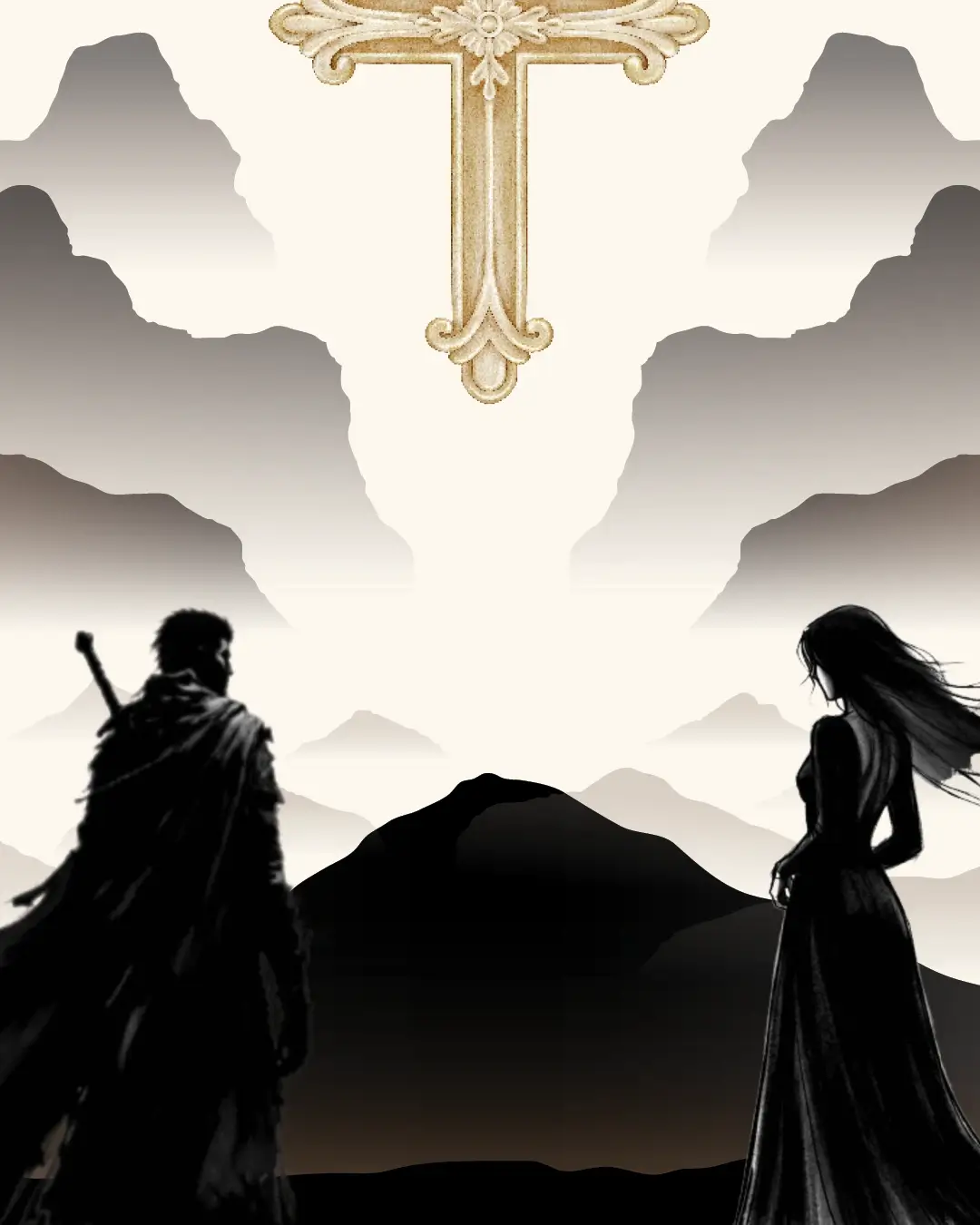
Despite the differences between the tales geared towards boys and girls, striking similarities remain in their core structure. For the race that lies before us all, four gates lie along our path:
1. Uncertainties and problems shall hinder our way, our finite nature guarantees it
2. We are called to a higher mission beyond ourselves and beyond our capabilities
3. To bear our own cross is our universal duty. To suffer discipline, to heal and grow from adversity in time, is the reality of life laid ahead of us
4. There is a great reward to finishing the quest
There shall always remain problems to be solved, dragons to be slain or to be tamed, and their solutions will require approaches with different framing. Neither suffering nor damnation discriminate, though the cruel warlords of vice carve out different territories among men and women. As it is written: “For all have sinned and fallen short of the glory of God” (Romans 3:23). In such spiritually dire times as ours, we are called to carry our cross, to confront the yawning abyss within us all. Neither a hero nor a heroine acting alone can withstand the oncoming onslaught. Instead, let each work together to strengthen the walls and man the defenses to tide us over in our moment of darkness.
The hour demands all who are able to rise against disaster, to embark on an expedition to face our fractured world, to ensure that even in the midst of our kingdom’s collapse, our little corner of the world stands resolute. Our duty beckons, for in Him we are children of the Most High, His cherished servants who shall judge even angels (1 Corinthians 6:3).
Even if we lack strength, we must undergo many ordeals, and discover the tools to face the many obstacles in our path. As different members in the body of the church, our flavours of strength are different, yet we all share the same head. The same Lord is Lord of all, and gives richly to all who call upon Him. Rally yourself to the banner of the Lord and train your body and soul, for every army has need of smiths, chefs, and requisition officers, of infantry, artillery, and cavalry to participate in the Lord’s battles.
Though we are not guaranteed reward for righteousness and honor on this side of the mountain, do not let drought cause us to forget the odyssey we have set out on. Let yearning, testimony, and thanksgiving grant us the glimmer of hope to plod onward. In our constant stumbling, rise as the righteous do, for until we are home, our commission is not complete. In bitter tribulation, do not forget love, for the one who has a why can endure any how. In desultory wandering, consult the Good Shepherd for the way, that we may continually journey towards goodness and truth.
This is the hero’s map I have drawn out for you. The path imprinted upon its yellowed skin has worn away, but I have done my best to restore it. Pick up your pen, gather your pages, and take it, my dear reader, for it is better than nothing at all. Bushes grow and trees wither, rivers bend and the earth breaks. Yet the final destination marked on the map remains the same. So go, face the trials of thy absolution. March on, even though the path is lost. For yonder lies the wicket gate of His heavenly kingdom. There shall be trials along the way. Bandits will swarm upon you. Great serpents shall overpower you. The very elements themselves will stand against you. But in fear, take heart, for God is the final author of your story, and He shall write a great tale if you would let Him.